Cardinal Song: Phrases, Season, and Similar Sounds
Quick visual checklist and song notes to evaluate a cardinal song, plus comparison steps and safe next checks before using an app for suggestions.
Quick answer for cardinal song
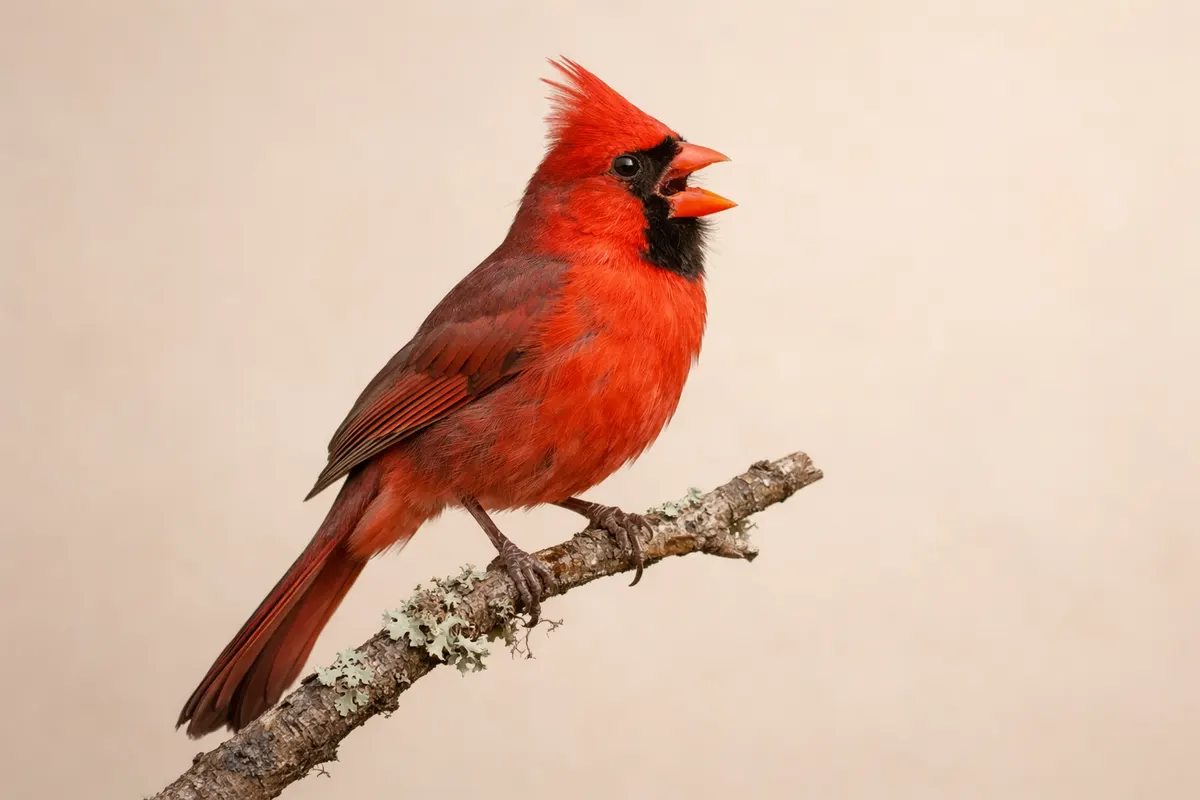
Cardinal song most often refers to the clear, whistled phrases given by Northern Cardinals; the sound is usually a series of distinct whistles or short two- to three-note phrases repeated from a perch. A single audio clip can hint strongly at a cardinal, but pairing sound with visual clues—crest, stout conical bill, and a bulky, long-tailed silhouette—gives far more confidence than either cue alone.
If you have a phone photo plus a short audio recording, start by checking the silhouette: a raised crest and a thick, cone-shaped bill are among the most durable visual clues for a cardinal. Males show bright red plumage and a black facial mask in good light; females are warm brown with touches of red and a duller mask, so don’t expect every image to look textbook-perfect.
Season and behavior help. Cardinals sing through much of the year but are especially vocal around breeding season and at dawn; a perched bird singing from a conspicuous twig or roofline is a typical cardinal posture that supports an audio match. Still, avoid claiming certainty from one photo or one clip: lighting, angle, distance, and immature plumage create common false positives.
For a practical next step, use a short checklist—silhouette, bill, face pattern, plumage distribution, and perch behavior—then compare the positive and negative matches. After that, you can run your photos and recordings through Bird Call Identifier - Featha as a second-pass tool and treat the app’s suggestions as research notes rather than final proof.
- Look for crest and stout conical bill first; these survive poor light better than subtle color.
- Combine posture and perch behavior with audio phrase repetition to strengthen a match.
- Treat app results as supporting evidence, not definitive identification.
Strongest visual clues
When evaluating a possible cardinal, prioritize features that still read clearly in ordinary phone photos: overall silhouette, bill shape, and the presence or absence of a contrasting face patch. These elements are less affected by exposure or slight blur than subtle feather hue or streaking.
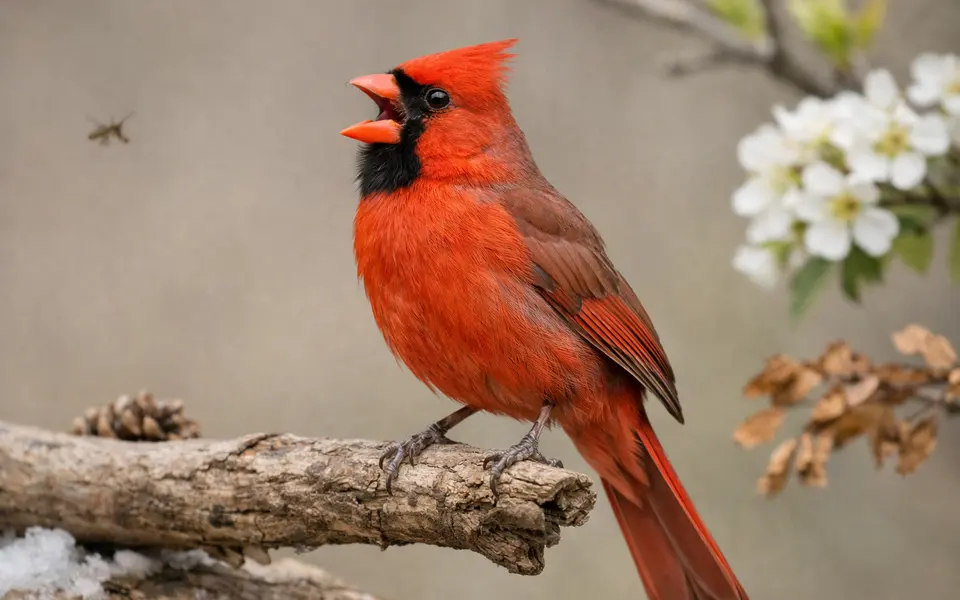
Crest: The crest’s triangular outline on the head is a high-value clue. Even when feathers lie flat, a visible crestline or raised-feather posture during singing is a strong indicator of a cardinal rather than a finch or sparrow.
Bill: A short, stout, cone-shaped bill is a diagnostic field mark. In many photos the exact color will be washed or shadowed, but the relative thickness and blunt tip of a cardinal’s bill remain apparent. Look for a bill that fills the face area rather than a small, thin beak.
Face and throat pattern: Adult male Northern Cardinals usually show a dark (often nearly black) mask around the bill and throat; females have a subtler mask or dusky face. The contrast between a dark face patch and surrounding plumage is a robust visual clue when visible.
Body shape and tail: Cardinals are relatively large for backyard songbirds, with a stocky body and a long, rounded tail. Measure perceived size against nearby objects—branches, feeder perches, or human-made structures—to judge if the bird looks larger than a sparrow or finch.
Behavioral and perch clues: Cardinals sing from exposed perches and often sit upright with their bill pointed slightly upward. If the photo shows the bird holding seeds or visiting a feeder that favors seed-eating species, that behavioral context supports a cardinal identification.
Plumage distribution: For males, red concentrated across head, chest, and back is distinctive; females show warm brown with red tinges on the crest, wings, or tail. When color is present but muted, rely more heavily on silhouette and bill shape than hue alone.
- Crest outline: visible triangle of feathers on the head.
- Cone-shaped bill: thick, blunt, fills the face area.
- Dark face mask (males) or dusky facial area (females).
- Stocky body with long, rounded tail—compare to nearby objects.
- Perch posture: upright, often singing from exposed twig or fencepost.
Weak signals
Some cues are unreliable in photos and should be treated as weak signals. Color shifts from camera auto-exposure, phone HDR, or backlighting can make non-red birds appear red or wash out a cardinal’s distinctive mask. Avoid treating any single color patch as definitive without other supporting marks.
One-angle problems: A single side-on shot can hide the crest or distort bill shape. In silhouettes taken at a distance, many medium-sized songbirds reduce to similar shapes—tail length and bill thickness are easier to misread than to confirm unless multiple angles are available.
Juvenile and female plumages are common sources of confusion. Young cardinals and adult females lack the vivid male red and may be mistaken for house finches, female grosbeaks, or even some sparrows when seen only briefly or through low-quality images.
Noise and motion blur: A blurred head or an out-of-focus bill removes the single most reliable visual clue for a cardinal. Similarly, a half-hidden bird inside dense foliage will render fine face markings useless.
Range and habitat cues should be used cautiously. A bird present outside its typical area or in an atypical habitat is not proof of a misidentification, but it does lower prior probability—so don’t overweigh habitat when other visual clues are weak.
Finally, posture can mislead: many species sing from raised perches, so seeing a bird singing from a visible twig is supportive but not exclusive to cardinals. Treat posture as a tiebreaker, not as defining evidence.
- Color shifts from light, HDR, or camera settings can mislead.
- Single-angle photos often hide the crest or bill shape.
- Juvenile/female plumage can resemble other brown-reddish species.
- Motion blur or poor focus deletes key face and bill detail.
- Habitat outside the usual range lowers confidence but is not proof.
Comparison workflow
A reliable comparison treats each clue as a vote for or against a cardinal rather than as a yes/no test. Work through a short workflow: gather images and any audio, make a primary list of matching clues, make a secondary list of ambiguous or missing clues, then weigh the combined evidence to form a tentative conclusion.
Step 1 — silhouette and bill: Open your best photo and crop tightly around the bird so the head, bill, and tail are visible. If the bill looks thick and cone-shaped and the crest or crestline is apparent, mark both as strong matches. If the bill is thin or the head shape is rounded without a crestline, move that item to the mismatch column.
Step 2 — face and plumage distribution: Check for a dark facial mask (in adult males) or the warm brown-and-red mix typical of females. Note where the red is concentrated—uniform red across the body favors a male cardinal, while streaking or red only on wings/tail points toward a different species.
Step 3 — behavior and audio: Listen to any recording for the cardinal’s often clear, whistled phrases that repeat in series. Recordings with several repeated, pure-tone whistles strengthen a cardinal hypothesis; mixed chip notes or raspy calls reduce confidence. If you have only a short clip, mark audio as tentative and prioritize visual evidence.
Step 4 — lookalike check: Compare observed features against common lookalikes such as house finch, rose-breasted grosbeak (female or immature forms), and some tanagers or grosbeaks when seen out of context. Make a short checklist of how the subject differs—e. g. , bill thinner (against cardinal), streaking on flanks (against cardinal), strong black-and-white contrast (against cardinal).
Step 5 — final weighting: Count strong matches versus mismatches. If silhouette, bill, face pattern, and audio all align, treat the ID as likely but not definitive. If two or more core clues disagree, list the bird as uncertain and gather more photos or longer audio before asserting a cardinal ID.
For more on interpreting bird calls and separating alarm or contact calls from song phrases, a practical reference is Bird Alarm Calls vs Contact Calls: What Common Sounds Might Mean (https://birdcallidentifier. app/blog/bird-alarm-calls-vs-contact-calls). That article helps you judge whether a recording is likely song, alarm, or chatter, which affects how much weight you give audio in your comparison.
- Crop images to isolate head, bill, and tail before judging silhouette.
- Make two lists: strong matches and ambiguous or mismatching clues.
- Compare bill thickness and face pattern directly against likely lookalikes.
- Use repeated pure whistles in audio as supportive evidence for song.
- If core clues conflict, mark the record as uncertain and collect more data.
App workflow
Once you’ve checked visible clues and applied the comparison workflow, use Bird Call Identifier - Featha as a second-pass research tool on your phone. The app can process photos and short recordings you took on-device, summarize likely matches, and show comparative notes; treat its suggestions as hypotheses to confirm rather than final verdicts.
Before opening the app, assemble the evidence: pick the best photo(s) that show the crest, bill, and face; include any audio with multiple repeated phrases if available; and note time of day and the perch or behavior visible in your images. This context improves how you interpret the app’s candidate list.
When the app returns suggestions, run them through the same checklist you used manually: which candidates match the crest and bill shape, which match face pattern and plumage distribution, and which better explain the audio. Use the app’s comparisons as a quick way to generate a short list of possibilities to research further.
If the app suggests multiple possible species or returns a low-confidence result, treat the output as a research note: keep the recording and photos, record additional clips at a different time of day, or try to photograph the bird from a different angle. Avoid assuming the app output is definitive when core visual clues are missing or contradictory.
Practical tips when using the app: prioritize multiple photos over a single image, prefer recordings of several repeated song phrases rather than single chirps, and add a short note about behavior or feeder use to the record. These simple steps increase the chance that the app’s suggestions will be useful starting points for further verification.
- Use the app only after you’ve inspected visual clues and audio yourself.
- Submit photos and recordings you captured on your phone; keep originals for your notes.
- Treat app suggestions as hypotheses—confirm with silhouette, bill, and face pattern.
- If the app gives low confidence, gather additional photos or longer recordings.
Related guides
Check your clues, then try the app for a second opinion
After you’ve checked crest, bill, face pattern, and song phrases, use Bird Call Identifier - Featha on your phone to generate candidate matches. Treat results as research notes—collect more photos or longer recordings for higher confidence.

Frequently asked questions
What does a cardinal song typically sound like?
A cardinal song is usually a series of clear, whistled phrases—simple two- or three-note motifs repeated several times. Recordings that contain several repetitions of the same pure-tone phrase are most useful when pairing audio with visual clues.
When do cardinals sing most often?
Cardinals sing year-round but are especially vocal during breeding season and in the early morning. Increased singing at dawn and during territorial displays makes those times particularly promising for capturing clear recordings.
How can I tell a female cardinal from a similar-looking bird?
Look beyond color: check bill thickness and shape, the subtle crest outline, and the pattern of red touches on the wings or tail. Females are browner and less vivid, so confirm with bill shape and head silhouette rather than color alone.
I have only one blurry photo and a short clip—what should I do?
Treat the record as uncertain. Note the visible clues you can trust (silhouette, perch, approximate bill shape), try to get additional photos from a different angle or at another time of day, and record several repeated phrases. Use the app as a second pass to generate candidate matches, then verify with expanded evidence.