Bird Chirping at Night: Common Reasons and Sound Clues
Find practical visible clues for a bird chirping at night, what a photo can truly show, and how to verify a tentative ID with safe follow-ups.
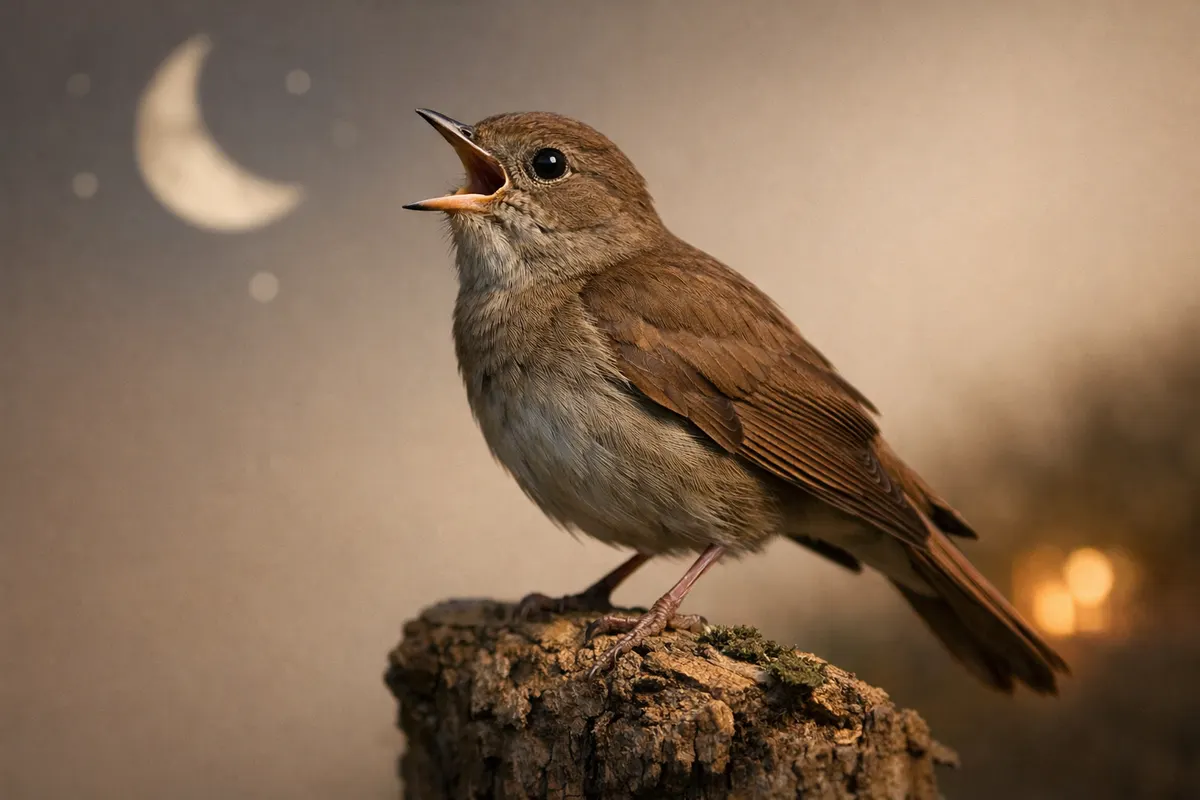
Quick answer: what a night photo can tell you
If you hear a bird chirping at night and have a phone photo or short recording, the strongest, realistic clues are silhouette, relative size, posture, and behavior — not subtle color shades. Low light and motion blur quickly erase fine plumage details, so begin by checking features that survive poor conditions.
Listen for the call's rhythm and repetition first: a short, steady series of repeated notes suggests a territorial song, while rapid, irregular chatter can be contact calls or feeding activity. Pair that audio sense with the photo’s context: where the bird was perched (open wire, dense shrub, rooftop), approximate size against a nearby object, and whether it showed a prominent tail or rounded head.
Treat any single clue as suggestive, not conclusive. A clear silhouette plus a matching habitat and call pattern can give moderate confidence, but a single noisy recording or a blurred night photo rarely proves species identity on its own. Use visible clues to narrow options, then gather more evidence — additional photos, notes on behavior, or another recording — before accepting an ID.
- Most reliable night-photo clues: silhouette, size relative to objects, posture, and behavior.
- Audio cues to check: rhythm, repetition rate, and whether the sound is a song, contact, or alarm call.
- Low-confidence clues: color tones under streetlights, tiny feather patterns, and single-angle beak details.
- Next step: use clues to produce 2–4 plausible species, then seek extra photos or recordings to raise confidence.
Strongest visible clues that survive low light
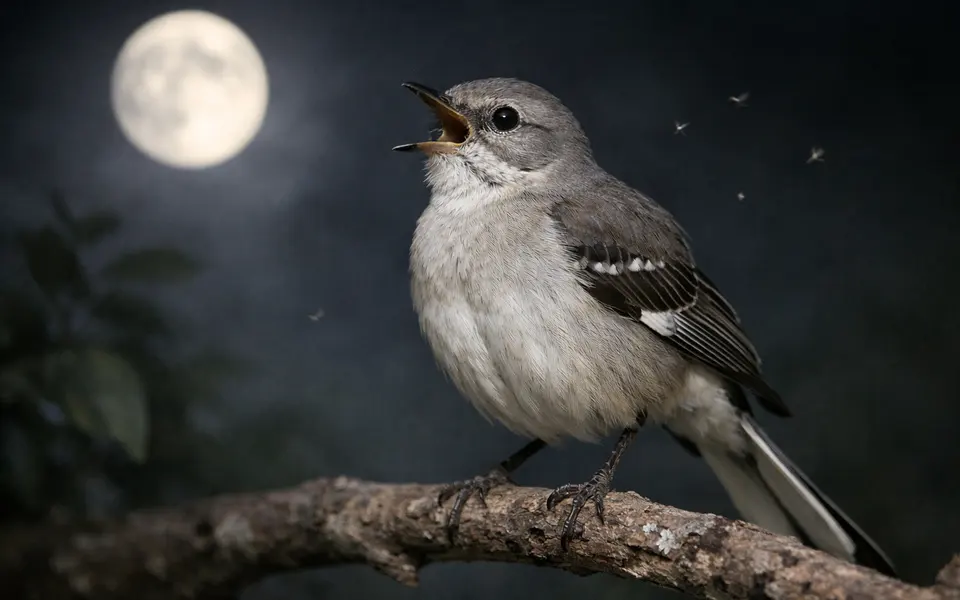
Silhouette and shape are the most robust visual clues when a bird is chirping at night. Even in dim conditions a bird’s overall outline — long tail versus short, slender body versus chunky, head shape and bill profile — often stays readable. Compare that outline quickly to familiar categories: songbirds (perching shape), raptors (broad wings, large head), or nightjars/owls (flat-head, wide gape).
Relative size against a nearby object is essential. A bird sitting on a telephone wire next to a sparrow-sized silhouette is very different from one occupying the same wire but clearly twice as tall. When possible, include a common reference (hand, fence, light pole) in the frame before the bird flies away; this single trick converts ambiguous photos into useful clues.
Perch choice and posture reveal behavior that narrows species sets. A bird singing from a high exposed rooftop or wire late at night is more likely to be a territorial urban singer (mocker, thrush, or starling) than a strictly nocturnal species. Conversely, a bird low in dense shrub or on the ground suggests different candidates — look for nightjars or small passerines active during crepuscular hours.
Sharp, simple field marks that persist in poor light include prominent tail shape (graduated, notched, or square), long or short bill silhouette, and any bold contrasting patches (a visible white rump, wing bar, or eye ring). These features can often be read from a small, grainy night photo and used to rule out broad groups of lookalikes.
- Silhouette: tail length, head profile, and overall proportions.
- Relative size: compare with wires, poles, or human-scaled objects in the shot.
- Perch and posture: high exposed perches vs low dense cover point to different species.
- Bold contrasts that show in night photos: white rumps, wing bars, or bright eye patches.
- Behavioral snapshot: singing posture, head-throwing, or repetitive wing flicks are diagnostic.
Weak signals to treat with caution at night
Color under artificial light is one of the weakest clues when identifying a bird chirping at night. Street lamps and porch lights skew hues dramatically: a warm sodium lamp can turn gray plumage golden, and cool LED lighting can wash out subtle streaks. Relying on perceived color for night identifications often leads to mislabels.
Fine patterning and small field marks — thin streaks, subtle mottling, or faint spotting — rarely survive motion blur and ISO noise. Juvenile plumage or birds in partial moult can also present misleading patterns that match multiple species. When a single photo shows these delicate features, double-check with more images at different angles or wait for daylight confirmation.
Reflections, glare, and camera artifacts commonly masquerade as field marks. A catchlight in the eye can look like an eye ring; lens flare can imitate a white wing patch; and digital noise can create false streaks. If any distinguishing mark appears only in one pixelated area or only under direct lights, treat it as suspect rather than decisive.
Context-free guesses are hazardous: saying a bird is species X solely because it ‘looks like’ a daytime photo of that species ignores habitat, season, and sound. Night behavior often overlaps across unrelated species: territorial males of many songbirds sing late into the night in cities, producing lookalike silhouettes and similar repeated notes.
- Avoid trusting color cast from streetlights or camera white balance at night.
- Don't rely on faint streaks, tiny spots, or marginal feather patterns in noisy images.
- Watch for camera artifacts: flare, pixel noise, and motion streaks that mimic marks.
- Single-angle beak or leg shots are insufficient; view multiple angles for confirmation.
How to compare likely matches using multiple clues
Start by forming a short candidate list (2–4 species) rather than hunting for a single correct name. Build the list from three layers: silhouette/size, habitat/perch behavior, and call pattern. For example, a small, stubby bird with a thin upright tail singing repeated fluted notes from a rooftop suggests a thrush or mockingbird in many urban areas; apply size and posture to choose among them.
Use elimination: cross out species that conflict with any strong clue. If the silhouette shows a long graduated tail, discard chunky short-tailed candidates. If the call recording has rapid, mechanical phrases, drop species known for slow, spaced songs. Each eliminated group raises your relative confidence for the remaining set.
Assign a simple confidence score to each candidate — low, medium, or high — and note which clue produced that score. A medium-confidence ID might rest on matching silhouette and habitat but lack a clear call; a high-confidence ID requires at least two independent, strong clues (e.g., distinct silhouette plus matching call rhythm or multiple photos showing the same field mark).
If you reach only low confidence, plan repeat observations: photograph the bird at first light, make a longer recording from a stable position, or watch for distinctive behaviors (wing flicks, tail fanning, or feeding posture). Keep your notes or app results as research observations rather than definitive records until corroborated.
- Step 1: Capture silhouette + size reference in your frame.
- Step 2: Note perch type and immediate habitat (roof, tree, shrub, ground).
- Step 3: Compare call rhythm and repetition rate from any recording.
- Step 4: Eliminate candidates that conflict with any reliable clue.
- Step 5: Assign low/medium/high confidence and seek corroborating evidence.
Using an app after checking visible clues
Once you’ve collected visible clues and a short recording, use an app as a second-pass research tool rather than an instant authority. Enter the context you noted: approximate size, perch type, and whether the call was repetitive or irregular. These details help the app prioritize likely matches and flag possibilities you might otherwise miss.
When recording, keep these simple habits: steady your phone on a railing or bag to reduce handling noise, record 10–30 seconds of continuous sound when possible, and note the time and precise location. For photos, take a sequence (three to five frames) from slightly different angles before the bird moves; even small changes in view often reveal a decisive field mark.
Treat app results as suggestions to investigate. If the app proposes multiple likely species, cross-check each against your strongest clues — silhouette, size, perch, and call rhythm — and update your confidence scores accordingly. If the app’s top suggestion conflicts with a strong visible clue, prefer your observed evidence and seek more data.
Keep uncertain or low-confidence app outputs as research notes. Tag them with the clues you used and revisit the record later if you secure more photos or a better recording. Over time these notes form a useful archive that improves your pattern recognition for which night callers are common in your area.
- Record 10–30 seconds of audio, steady the phone, and note time/location.
- Take a short burst of photos from slightly different angles for field-mark validation.
- Feed the app context: size, perch type, and behavior before accepting suggestions.
- Use app matches to prioritize follow-up, not as final proof of species identity.
Related guides
Check clues, then try Bird Call Identifier - Featha
After you’ve noted silhouette, size reference, perch, and recorded the call, use Bird Call Identifier - Featha on your phone as a second-pass tool to surface likely matches. Feed the app the context you observed (approximate size, perch type, and whether the call repeats) and treat its suggestions as research leads. If results are uncertain, save them with your clues and revisit when you can get clearer photos or a longer recording — that two-step habit produces the most reliable IDs.

Frequently asked questions
Why do birds chirp at night instead of during the day?
Many birds sing or call at night for territorial defense, mate attraction, or because urban lighting and quieter nights make songs travel farther. Some species are naturally crepuscular or nocturnal and are active at dusk and during the night. Weather, artificial light, and breeding stage can all extend singing into night hours. Use both the timing and the pattern of notes to understand whether you heard a territorial song (often structured and repeated) or casual contact calls (shorter, more irregular).
Which kinds of birds are most likely to vocalize after dark?
Common night vocalizers include some thrushes and mockingbirds in urban settings, certain warblers during migration stopovers, nightjars and owls that are naturally nocturnal, and some owlish species that give long, spaced calls. Urban-adapted species may also sing late due to artificial lighting and noise relief at night. Match the bird’s perch and silhouette from your photo with known nocturnal or urban-singing species in your region to narrow candidates.
Can a single night photo identify a bird species reliably?
Rarely. A single low-light photo can show strong clues like silhouette and perch but usually lacks the fine detail needed for a definitive ID. Use the photo to limit possibilities rather than to name the bird outright. Combine it with a short recording, behavior notes, and additional photos taken at dawn when light improves. If you want a deeper explanation of how different calls function, a related piece on alarm calls versus contact calls explains similar decision steps and listening clues.
What should I do if an app gives a different result than my photo clues?
Treat the discrepancy as a prompt to gather more evidence. Re-play and review your recording, double-check the photo for overlooked field marks, and take more images at different angles or in morning light. If the app’s suggestion conflicts with a strong visual clue (clear silhouette or size reference), give greater weight to the observed evidence and mark the app result as tentative. Keep both notes; they can be useful when consulting local guides or birding communities.