Robin Song: Patterns, Dawn Clues, and Lookalike Calls
Use visible clues, timing, and a simple comparison workflow to evaluate a robin song and when to verify beyond the photo or audio.
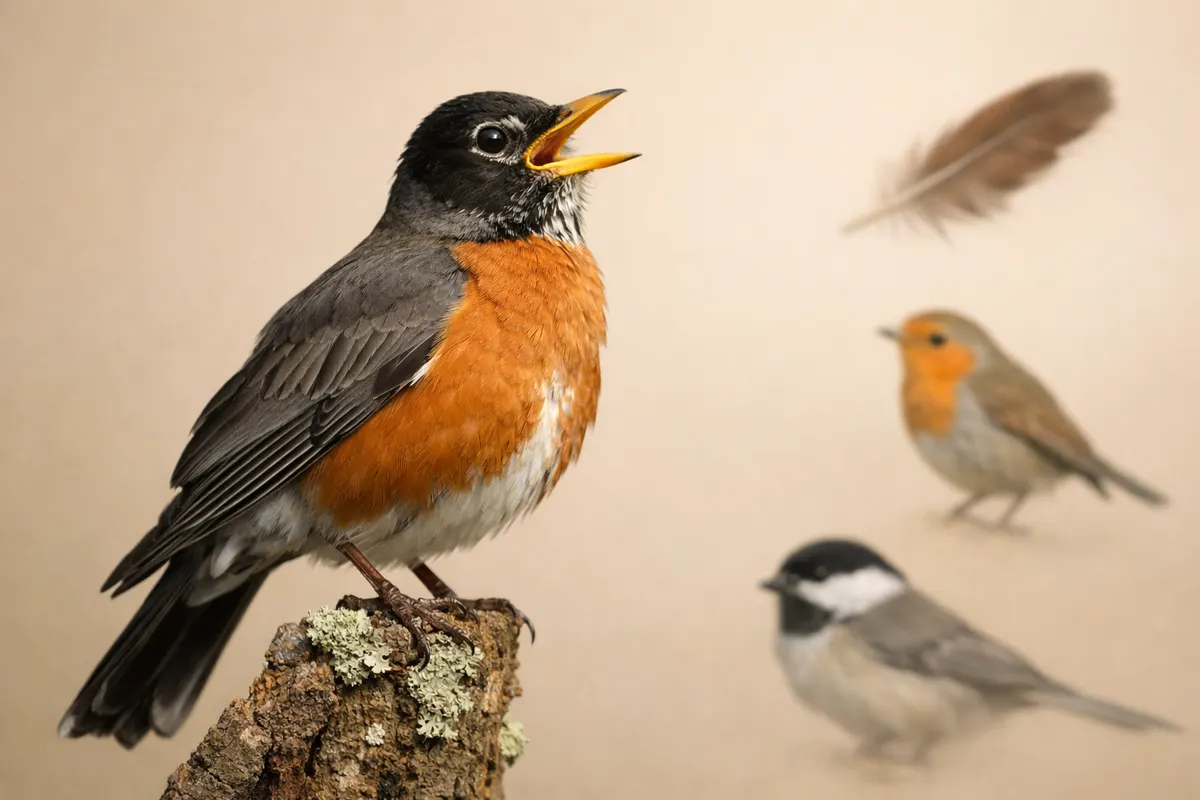
Quick answer: what a robin song can show
A robin song gives strong clues about behavior and timing, but visible evidence is necessary to narrow species and rule out lookalikes. If you hear the classic series of clear, fluted phrases at dawn and also see an orange-breasted bird perched in an exposed tree or on a lawn, the combined audio plus visual clues make a robin-level ID much more likely than listening alone.
Use photos that capture posture, bill shape, and the breast pattern alongside the audio: these are the practical elements that survive poor lighting, camera shake, and distance. A single sound recording can suggest "a thrush-like song" or "repeated caroling," but a phone photo that shows a rounded body, medium size, and an orange or rufous breast is the visual evidence you need to move from a guess to a confident field identification.
Expect limits. Lighting, molt stage, juveniles, and camera angle can hide or exaggerate colors. Treat a one-photo, one-recording result as a working note: it’s enough to shortlist likely robin species and lookalikes, but not to claim certainty. After you collect clues, use a stepwise comparison (below) and consider using a tool like Bird Call Identifier - Featha to synthesize the evidence on your phone.
- Strongest immediate clues: perched posture, bill shape, and breast contrast.
- Audio helps but rarely proves species on its own—combine sound with visuals.
- Juvenile plumage and lighting can mislead; treat single observations as provisional.
- Use the app as a structured second pass after you collect visible clues.
Strong visual clues that support a robin song
When you pair visual evidence with a robin song, prioritize features that still read in average phone photos: body outline, relative size, bill shape, and clear breast pattern. For American robins (Turdus migratorius) you’re often looking for a medium-sized thrush silhouette, upright posture when perched, a longish tail that may flick, and a warm orange to rufous breast that contrasts with a gray back. For European robins (Erithacus rubecula), look for a rounder, smaller body and a compact posture with a distinct orange face and chest separated from a brownish back.
Bill shape and gape are underrated but useful: robins have a fairly straight, medium-thickness bill suited to eating invertebrates and fruit. In photos where color is washed or the bird is backlit, the bill outline and the way the head meets the neck still help separate robins from warblers, sparrows, and some finches.
Behavioral clues visible in a short photo set or brief video can be decisive. Robins commonly forage on lawns or on low branches, cocking their heads and making short runs or hops while searching for worms. If you have a short video or a burst of images, look for those gait and foraging patterns—many lookalikes do not display this low-to-ground, constant-turn behavior.
Location and perch choice are strong context clues that survive poor images: a singing robin at the top of a deciduous tree at dawn, or an American robin on an urban lawn, are both typical. Habitat alone doesn’t identify species, but it narrows the candidate list when combined with visible features and song timing.
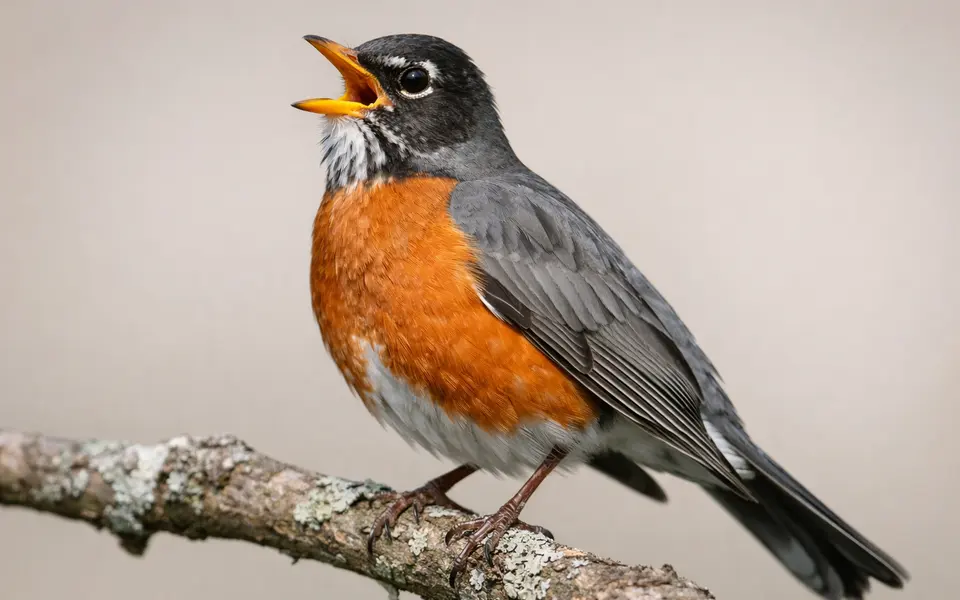
- Body shape: medium thrush silhouette (American) or compact rounded posture (European).
- Breast pattern: uniform warm orange/rufous for American; orange face/chest patch for European robin.
- Bill: straight, medium-thickness—useful when color is unclear.
- Foraging posture: ground hopping and worm-pulling in American robins is characteristic.
- Perch choice and time of day: exposed branches or lawns at dawn increase likelihood.
- Series of photographs or a short video beat a single snapshot for behavior clues.
Weak signals and common pitfalls for robin song IDs
Not all visible cues are equally reliable. Color hue, for example, is a weak signal when used alone—camera white balance, backlighting, digital saturation, and feather wear all shift how orange or rufous a breast looks. Juvenile robins often have spotting and muted tones that can easily be mistaken for other thrush species or for a faded adult in poor light.
Single-angle photos are another common trap. A bird photographed in flight or from behind might show only a gray back and tail, which can match many other backyard species. Relying on tail color or a single visible streak can produce false matches; always seek multiple views or supplementary behavior notes (feeding style, perch type) before concluding that the photo confirms the song.
Lookalikes happen. Several thrushes and even some sturnids share the same warbling or fluted song quality, and plumage overlaps with species that occupy similar habitats. For example, a distant thrush singing in the dawn chorus can sound very like an American robin to an inexperienced listener, and color saturation in a phone photo can make a different thrush appear more orange than it really is.
Finally, be cautious with social-media-level inspection: heavy cropping, aggressive filters, or compressed images degrade the subtle field marks you rely on. Treat edited images as lower-confidence evidence and prioritize raw photos or short video clips taken at the time of observation.
- Color alone is unreliable—check shape and behavior too.
- Juvenile spotting or molt can mimic adult patterns; compare age markers.
- Single-angle shots and heavy photo edits reduce ID confidence.
- Distant audio without visuals is suggestive but not conclusive.
- Beware of confirmation bias: if you want to see a robin, you’ll overread weak clues.
Comparison workflow: combine clues to evaluate robin song
A simple, repeatable workflow helps turn scattered clues into a reliable assessment. Start by listing the strongest visual clues you have from photos or video: body shape, bill silhouette, breast pattern, and behavior. Next, add time-of-day and habitat context—robins singing at dawn from exposed perches or patrolling lawns add weight to a positive ID.
Bring the audio into the comparison second. Note the structure of the robin song you heard: did it sound like short, repeated phrases (classic American robin caroling) or a melodic, warbling single-voice song (some European robin males)? Record a short clip if possible; even a noisy clip can reveal phrase length, repetition rate, and pitch range that narrow options.
Cross-check the two streams of evidence against field-reference photos and range maps. If your visible clues and song match the expected regional timing and habitat, mark a provisional ID. If they conflict—say, a song that sounds thrush-like but photos show a small rounded bird—flag the observation for further review rather than forcing a conclusion.
If needed, use a structured elimination: rule out birds that clearly lack the bill shape or body size in your photos, then compare remaining candidates by the two strongest matching features (often breast pattern and foraging behavior). For more on timing and dawn singing behavior you may find our guide Why Birds Sing at Dawn: Timing, Territory, and Morning Sound Clues useful: https://birdcallidentifier.app/blog/why-birds-sing-at-dawn
- Step 1: List strong visual clues from photos/video (shape, bill, breast pattern).
- Step 2: Add context—time of day, perch height, habitat type.
- Step 3: Compare audio phrase structure and repetition to visual shortlist.
- Step 4: Eliminate mismatches by bill shape or body size first.
- Step 5: Flag conflicting evidence for follow-up rather than forcing ID.
How to use the app after checking robin song clues
After you collect photos, short video bursts, and an audio snippet, use a structured app workflow to consolidate your notes. First, make sure your files are saved on the device—the app works best when you have the raw audio clip and the least-edited image available. Note the context: location, time of day, and behavior (foraging on lawn, perched in canopy, etc.).
Open Bird Call Identifier - Featha on your iOS device and start a new observation. Enter the visible clues you recorded: body size (small/medium/large), distinctive breast or face markings, bill shape, and any observed behaviors. Attach the photo and audio clip locally from your phone’s library; the app uses these signals together rather than relying on a single input.
Treat the app output as a prioritized shortlist, not a final verdict. If Featha suggests several possible matches, compare those candidates against your original photos and notes—pay special attention to the features that survive poor lighting (silhouette, bill, behavior). Use any mismatch to refine which candidate best fits all evidence.
If the app result is uncertain, save the observation as research notes in the app and return later with fresh evidence: additional recordings made at different times of day, or new photos that show the breast and bill more clearly. Keeping a short log of what you saw and when makes later verification far easier and reduces the risk of overconfident misidentification.
- Save raw photo/video/audio on your device before opening the app.
- Record context: location, time, perch type, and behavior.
- Attach media to a new observation and enter visible clues manually.
- Use the app’s shortlist as a research starting point, not as proof.
- If uncertain, log the observation and seek more recordings or photos later.
Related guides
Check your robin song clues with Bird Call Identifier - Featha
After you collect photos, short videos, and an audio clip, use Bird Call Identifier - Featha on your iOS device to consolidate evidence and generate a prioritized shortlist. Enter the visible clues you noted—breast pattern, bill shape, perched posture—and attach the raw files from your phone. Treat the app’s suggestions as research support, not final proof: if the results are uncertain, save the observation, add more recordings at different times, or revisit the scene. Use Featha as a structured second pass that helps you move from a good hunch to a reasoned, evidence-backed note about a robin song.

Frequently asked questions
Can I identify a robin just from its song?
You can often narrow observations to a robin-like thrush from song alone, especially if the pattern matches the familiar caroling or warbling. However, audio on its own rarely proves species because several thrushes and passerines share similar phrasing. Combine song with visuals—body shape, bill outline, and breast pattern—to reach a confident ID. Treat audio-only notes as provisional until you add photographic evidence or behavior observations.
How do juvenile robins differ in appearance and song?
Juvenile robins commonly show spotted or streaked breasts and duller coloration compared with adults, which can hide the classic orange breast that helps field IDs. Their songs and calls may also be less structured or softer while they learn. Because juveniles are visually different, rely more on behavior (foraging style, association with adults) and context (season and habitat) when matching a juvenile photograph to a robin song recording.
What are the most common lookalikes for a robin song in backyards?
Common lookalikes include other thrushes and some larger sparrows or sturnids that produce warbling or caroling phrases. In many regions, a distant thrush or even a starling with a complex mimicry song can be mistaken for a robin. Visual confirmation—bill shape, body size, and breast pattern—helps rule these out. When in doubt, mark the observation as 'probable robin' and gather more photos and a clearer audio recording before publishing or sharing the ID.
When should I consult experts or verified recordings?
Consult experts or verified reference recordings when your photos and audio conflict, when the bird appears to be a rare species for your area, or when the observation will be used for records or research. Use verified sources to compare phrase length, pitch band, and spectrogram patterns for audio, and compare high-quality reference photos for subtle plumage details. If you plan to file a formal sighting, gather multiple lines of evidence—raw audio, multiple photos from different angles, and precise time/location notes—before submitting to a community or expert reviewer.