Crow Calls Meaning: Caws, Alarm Calls, and Group Behavior
Understand crow calls meaning from visible clues: which photo details hold up, common lookalikes, and safe follow-up checks to improve confidence.
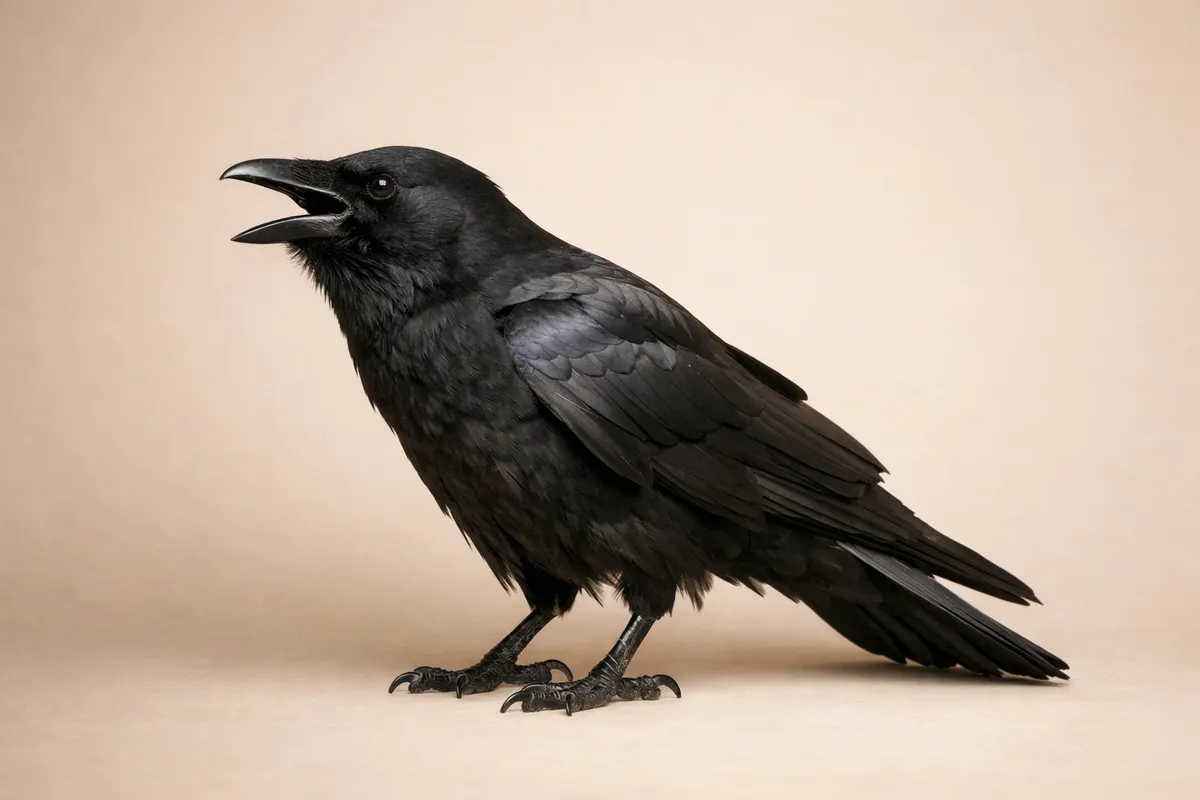
Quick answer: what a photo can tell about crow calls
Crow calls meaning is usually inferred from behavior and context more than from plumage, so a single photo rarely proves why a crow is vocalizing. A well-timed image does, however, preserve important visual evidence: flock size, posture, recent interactions (for example mobbing or feeding), and habitat cues that link a call to likely causes such as alarm, contact, or territorial calling.
If you want a fast read of what a call might mean, look first for obvious behavior in the frame: are multiple birds facing the same direction, are wings spread, is there a predator in view, or is the bird alone on a post? Those visible signs change the probability of a call being an alarm, contact, or everyday caw. Use them as probabilistic clues rather than definitive proof.
Practical takeaways: treat photos as context evidence. Use them to narrow possibilities and to record hypotheses (alarm, recruitment, scolding, contact) that you can test by listening to recordings, watching sequence shots, or gathering more observations from the same location and time.
Most reliable visual clues for crow calls meaning
When assessing a photo for crow calls meaning, prioritize clues that are resilient to poor lighting, angle, and modest resolution. Start with group composition: the number of individuals and their spatial arrangement is often the single strongest hint. A tight cluster of crows converging on one spot usually accompanies mobbing or alarm calls, while dispersed pairs or single birds are more likely exchanging contact calls.
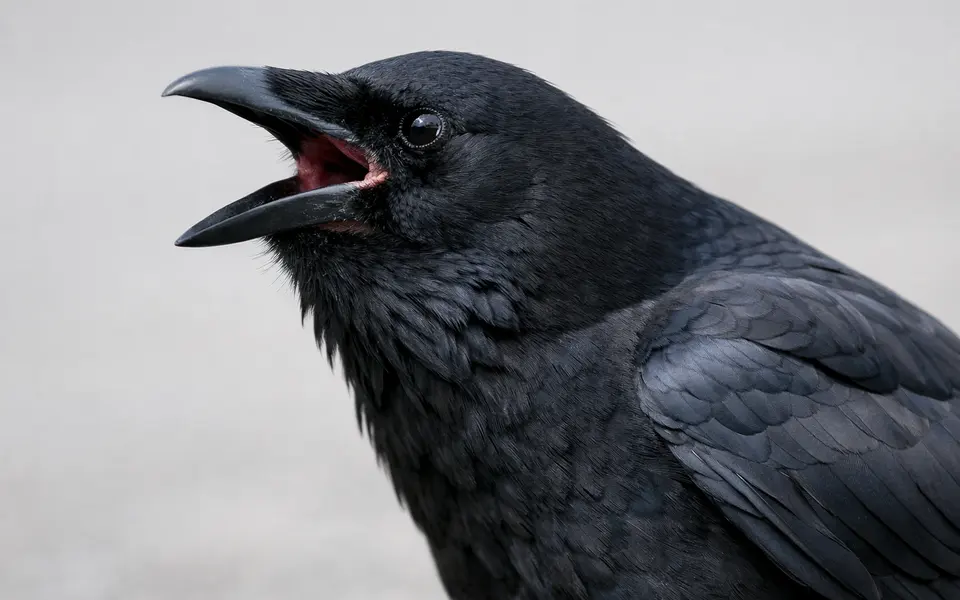
Next, focus on visible posture and motion captured in the frame. Raised hackles, fluffed feathers, erect tail and neck, repeated wing-raising, and open beaks directed at a single target correlate strongly with alarm or scolding behavior. Conversely, relaxed perching with closed beak and soft body language most often goes with neutral contact calls or social chatter.
Habitat and the visible stimulus in the frame matter. A photo that clearly shows a hawk, owl silhouette, or cat near crows increases the probability the call is an alarm. An urban scene with human food sources or traffic may favor contact or opportunistic calls rather than predator alarms. Together, durable scene clues let you assign higher or lower confidence to different call meanings.
- crow calls meaning clues
- Group size and arrangement — converging flock suggests alarm or mobbing.
- Body posture — erect neck, raised feathers, and open beaks point toward scolding or alarm.
- Visible stimulus — predators, fledglings, or human disturbance raise alarm likelihood.
- Perch and location — roadside or food source scenes may indicate contact or scavenging calls.
Weak signals
Some photo details tempt readers into overconfident conclusions. Color nuances, subtle eye color differences, or slight feather sheen changes are fragile: they shift with light angle, exposure, and camera processing. Crows are glossy black; reflections and camera white balance can create the impression of different species or moods, but these are unreliable for inferring call meaning.
Single-angle wing or tail positions photographed mid-motion can be misleading. A wing raised in one frame might be flap recovery or a takeoff, not a deliberate threat display. If you only have one still, note the pose as suggestive, then look for sequence shots or a short video to check whether the posture repeats in a pattern consistent with alarm behavior.
Assuming call meaning from color-based lookalikes is risky. Juveniles, urban grime, or wet feathers can change how a crow looks, but they rarely change the vocal category a bird is using. Treat these visual features as weak signals and avoid treating them as voting evidence unless supported by stronger context clues like group behavior or a visible predator.
- Relying on feather sheen or perceived color shifts to infer call type is unsafe.
- Single-frame poses without sequence context can be false positives for alarm behavior.
- Background blur or motion artifacts may hide or fake a visible stimulus.
- Assuming species or call type from leg, beak, or eye color alone is unreliable.
How to compare likely call meanings step by step
Use a simple workflow to compare hypotheses rather than trying to choose a single answer immediately. Start by making three quick hypotheses for the call: alarm (predator or threat), contact (group coordination), or food/territorial call. For each hypothesis, list the visual clues that would support it from the photo: number of birds, posture, visible stimulus, and habitat. This structured comparison helps you avoid being biased by one striking but weak detail.
Next, score each hypothesis for supporting clues you actually see. For example, an image showing five crows all facing a moving hawk silhouette, with open beaks and raised feathers, scores strongly for alarm. An isolated perched crow on a lamp post with relaxed posture scores poorly for alarm but better for contact call. Translate these scores into confidence bands (low, medium, high) and record them with the photo as a hypothesis note.
When your confidence remains low, gather secondary evidence: time of day, any nearby recordings, previous observations at the same site, and whether other observers reported similar behavior. If you recorded audio, compare the spectrogram of the call to known alarm versus contact patterns; if not, the visible comparison workflow still narrows possibilities usefully. For further reading on sound-context splits, see Bird Alarm Calls vs Contact Calls: What Common Sounds Might Mean for how calls differ behaviorally and acoustically.
Finally, keep a short decision log with the photo: your initial hypothesis, the clues that supported it, and what follow-up would increase confidence (extra photos, a short video, an audio clip, or repeated visits). That log turns a single image into a research note rather than an asserted identification.
- Form three hypotheses: alarm, contact, or food/territory.
- List observed clues from the photo under each hypothesis.
- Score confidence (low/medium/high) and record it with the image.
- Plan one concrete follow-up (audio, sequence photo, or repeat observation).
App workflow
After you’ve checked visible clues and recorded your hypothesis notes, use Bird Call Identifier - Featha as a first-pass research tool to combine your visual evidence with sound or additional images. Start the app session by entering concise context notes: observed behavior, number of birds, and the visible stimulus. These fields help the app weigh the photo in context and remind you to treat any app result as a hypothesis rather than a final verdict.
If you have an audio clip or a short video that captures the call, add that file to the app session on your device and reference it from your notes. The app can help surface likely call categories when audio is present, but remember that acoustics alone can be ambiguous; combine audio results with the visual checklist you already used to increase confidence. If you don’t have audio, feed the app your image plus the confidence band you assigned earlier.
Use the app’s comparison suggestions to check similar behavior patterns and to learn common visual-audio pairings. The tool is most useful when you treat its output as a ranked set of possibilities and then validate those possibilities against your on-the-ground notes and, if available, further observation. Do not use the app as a replacement for gathering clear behavioral context.
When the app suggests uncertain or mixed results, save its output with your photo and notes as research data. This creates a record you can return to later if new evidence appears, or share with local birding communities for corroboration. Treat the app as a smart assistant that amplifies your evidence-based workflow rather than as an oracle.
- Enter short, concrete context notes before running a session
- Attach audio/video if available — combined evidence beats single clues
- Treat app suggestions as ranked possibilities, not final IDs
- Save results with your hypothesis log for later verification
Related guides
Use Bird Call Identifier - Featha after you check visual clues
After you’ve inspected group size, posture, and visible stimuli, try Bird Call Identifier - Featha as a next step to combine your photo and any short audio into ranked possibilities. Treat the app’s suggestions as research leads: record the app output with your hypothesis notes, and use follow-up photos or recordings to confirm. Featha is designed to support evidence-based field workflows—not to replace your own observations—so save uncertain results as research notes you can revisit or share with local birding groups.

Frequently asked questions
How reliable are visual clues alone for interpreting a crow’s call?
Visual clues can strongly suggest a call’s meaning but rarely prove it on their own. Group size, posture, and a visible predator raise the probability that a call is an alarm; relaxed posture and one-to-one interactions suggest contact calls. However, camera angle, timing, and absence of sound make certainty difficult. Use photos to narrow possibilities and pair them with short audio recordings or repeat observations to confirm what the crow was communicating.
Crow calls meaning examples? What typical scenes match alarm, contact, or food calls?
Here are practical, scene-based examples you can expect. Alarm: multiple crows converging on a hawk silhouette with open beaks, raised feathers, and aggressive dive-bys. Contact: two crows perched apart on the same fence post, bodies relaxed, and occasional soft caws to keep location contact. Food/aggregation: several crows around a roadside food source with pecking, shuffling feet, and short sharp calls as they jostle for access. Each example shows how visible behavior aligns with likely call categories but remember to confirm with sound or repeated observation when possible.
Can one photo ever prove a crow call was an alarm in the field?
A single photo can provide strong evidence but not absolute proof. If the image clearly captures a predator in direct proximity, multiple crows actively mobbing or harassing it, and the birds’ body language matches known alarm displays, you can have high confidence. Still, without audio or sequential frames showing consistent behavior, treat that confidence as provisional. The safest approach is to label the image as ‘probable alarm’ and note what follow-up would raise certainty, such as a short recording or additional frames.
What should I record alongside a photo to improve crow calls meaning interpretation?
Add concise observational notes and, when possible, a brief audio clip or 10–20 second video. Record time of day, exact location, number of birds, any visible stimulus (predator, fledgling, food), and whether the behavior continued after you left. These items turn a single photograph into a richer dataset that supports stronger inferences. Even simple notes like “three crows mobbing hawk at 09:15” make later verification and app-assisted comparison much more reliable.