Hawk Calls: Screeches, Keers, and Flight Context
Learn how to read visible clues in photos to evaluate hawk calls—screeches, keers, and flight context—plus comparison steps and safe next checks.
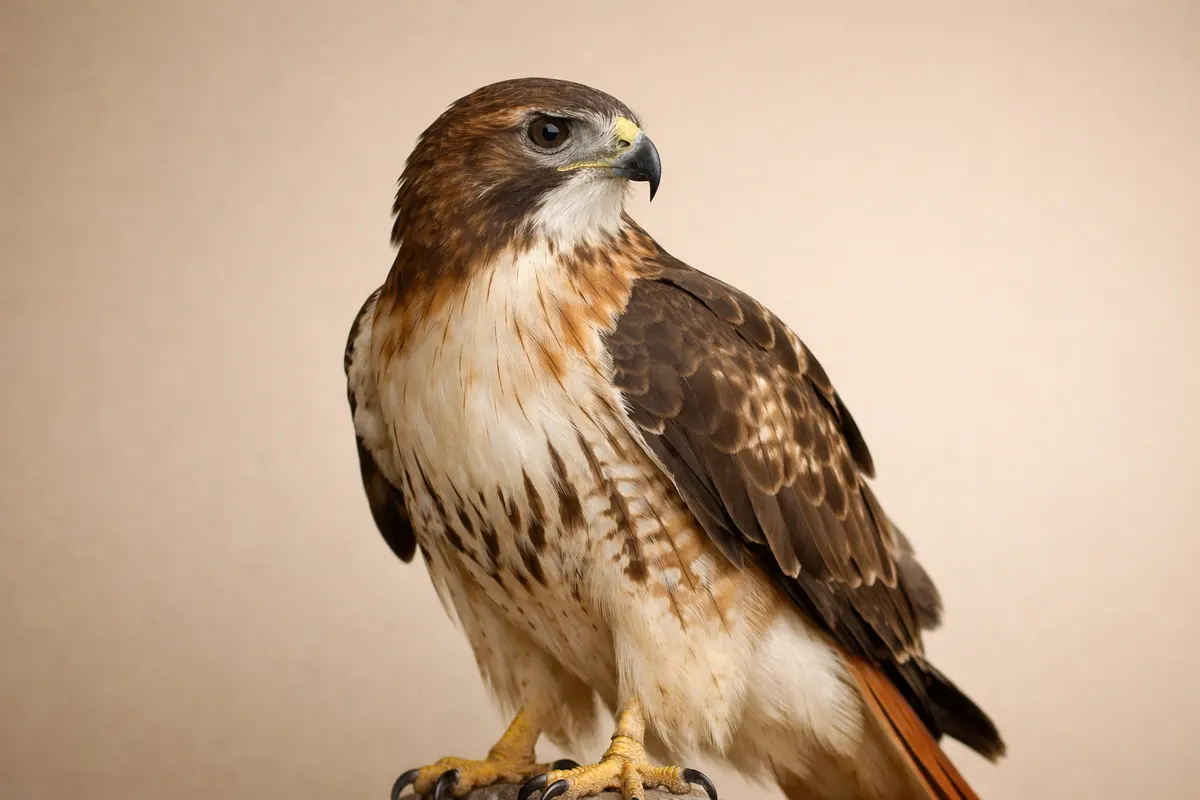
Quick answer for hawk calls
Hawk calls — the drawn-out screeches, sharp kees or keers, and single-note chips heard in flight — carry useful context but rarely identify a species on their own. The strongest evidence comes from combining the sound description with visible clues in photos or video: size and silhouette in flight, wing shape, tail length and pattern, and the bird’s posture when calling.
A single phone photo of a perched hawk can narrow possibilities when it clearly shows tail bars, a rounded versus tapered wing, or a distinctive pale or streaked breast. In flight, details like a broad, rounded tail or long pointed wings paired with the timing of a shriek (e.g., during pursuit or territorial display) make certain species more likely than others.
Realistically, use visible clues to move from broad groups (hawk vs. falcon, accipiter vs. buteo) toward a shortlist of species, not to declare a single identification. If a call and photos point to a likely match, treat that result as a research note: a working ID to verify with additional photos, a recording, habitat data, or an app-assisted second opinion.
- Combine audible notes (screech, keer, chip) with photos showing silhouette and tail pattern.
- Flight posture and wing shape are often more reliable than color in harsh light.
- Perch photos that show tail banding or breast streaking can narrow to genus or species group.
- Treat any single clue as supportive evidence, not conclusive proof.
Strong visual clues for hawk calls
When assessing hawk calls from images, prioritize clues that are robust across lighting and angles. Silhouette features—wing shape, tail length and outline, and overall proportions—survive many common photo issues and separate Accipiter hawks (short, rounded wings, long tail) from Buteo hawks (broad wings, short tails) in most images.
Tail pattern and shape are particularly diagnostic. Look for banding (regular light/dark bars), a uniformly dark tail, a white terminal band, or a notched tail margin. These traits are often visible even in backlit photos. A long, rounded tail with multiple narrow bands points toward accipiters like Cooper’s or Sharp-shinned Hawks; a wide tail with a single pale band or blocky bars is more typical of many buteos.
Wing posture in flight gives strong clues. Note whether the wings are held in a steady dihedral (slight ‘V’), lifted high and bowed, or flat and swept. Fast, pointed wing tips and stiff wingbeats suggest falcons; slow, deep wingbeats and broad wing surfaces suggest buteos. Also check the flight silhouette while the bird calls: calling during a stoop or chase, or while perched and erect, provides behavioral context that supports a shortlist of species.
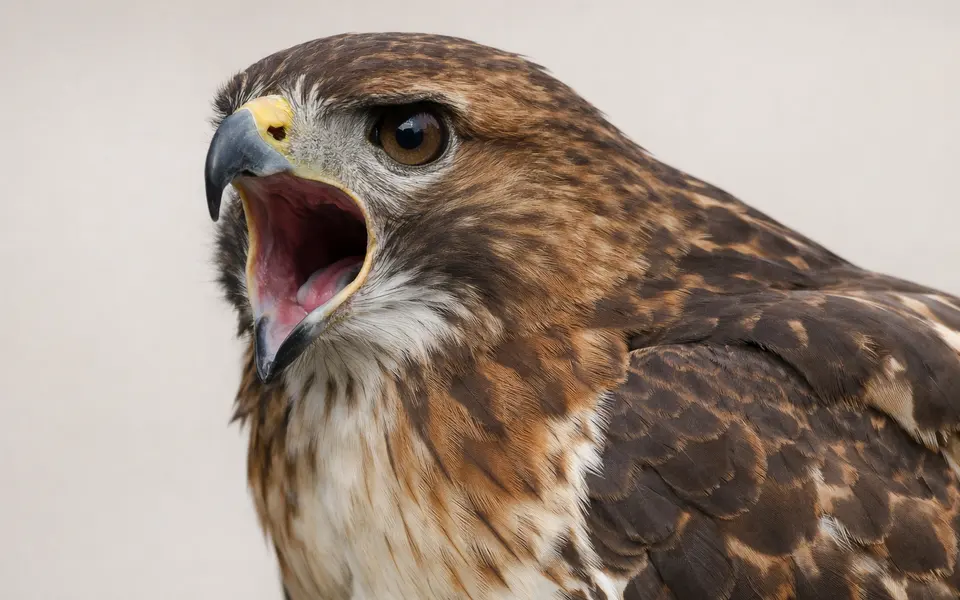
- Silhouette: wing length vs. tail length separates accipiters from buteos.
- Tail pattern: number and width of bands, presence of a terminal band, and overall tail shape.
- Wing shape: rounded vs. pointed tips, wing chord relative to body size.
- Posture while calling: perched and upright, soaring, or actively pursuing prey.
- Size context: nearby objects (tree branch, power line) can help estimate size in photos.
Weak signals to avoid over-weighting with hawk calls
Color tones, especially under variable light, are often unreliable. Many hawks show age-related and individual variation in color, and camera white balance, backlighting, or shadows can shift apparent hues dramatically. A reddish tinge in a photo might be a juvenile plumage, sunlit rufous, or simply warm camera processing; don’t rely on color alone to differentiate species.
Single-angle features like a slightly hooked beak visible in one low-resolution photo are weak signals. Small details such as thin streaking on the breast or slight contrast on primaries may be indistinct in phone images and are easily misread. If a characteristic is only visible from one angle or only in one frame of a shaky video, treat it as suggestive rather than definitive.
Behavioral assumptions tied to time of day or habitat can mislead. For example, assuming all soaring hawks in a field are Red-tailed Hawks ignores juvenile buteos and migratory species. Similarly, short calls labeled as ‘alarm’ without context can be misattributed across species. Use habitat and behavior as supporting context, not the main identification driver.
- Avoid relying on color under harsh light, heavy shadow, or camera filters.
- Do not treat single pixel-level details as diagnostic in low-resolution photos.
- Resist assuming behavior-derived IDs without supporting morphology (e.g., soaring ≠ Red-tailed).
- Juveniles often blur field marks; age and sex variation can overturn apparent color clues.
Compare likely hawk-call matches step-by-step
Start with a rapid exclusion pass: separate birds with falcon-like shapes (long pointed wings, slim body) from broad-winged hawks, then partition accipiters from buteos using tail-to-wing proportion. This first filter often cuts the candidate list in half and aligns the sound type (high-pitched scream vs. thin chip) with plausible genera.
Next, layer stable visual clues. Confirm tail pattern, then check wing shape details, and note any breast or belly banding that survives across images. Add behavioral context: perched shrieks are often territorial; calling while circling or soaring may indicate a different social or hunting context. When two species share similar silhouettes—like Cooper’s and Sharp-shinned Hawks—focus on finer proportional cues (Cooper’s usually shows a larger head and a more rounded tail tip) and any size reference from the photo.
Create a short-ranked list of 2–4 likely species with the strongest matching clues for each. For each candidate, list the supporting clues and the weaknesses of that match. This structured comparison prevents confirmation bias and clarifies what further photos or a recording would need to show to decide between the top contenders.
If the visual clues still leave more than two plausible candidates, add habitat and season data next. Some hawks are local breeders and others are migrants; a late-spring sighting in dense forest versus an open plains sighting can shift probabilities. Keep notes of all uncertainties and treat the comparison as a living checklist to refine when more evidence appears.
- Filter by broad silhouette first: falcon-like, accipiter, or buteo.
- Confirm tail bars and wing shape as second-level filters.
- Rank 2–4 candidates and list supporting and contradictory clues.
- Use habitat and season as probability shifters, not proof.
App workflow
After you’ve gathered photos and noted the strongest clues, use an app like Bird Call Identifier - Featha as a structured second opinion. Treat the app as a research partner: input your best photos and any available audio, but start from the shortlist you created so the app’s suggestions are evaluated against your visual evidence rather than accepted uncritically.
When an app returns matches, compare its top suggestions to your ranked list. If the app aligns with your strongest clues, it increases confidence in the working ID; where it diverges, re-check the photos for overlooked features (angle, tail pattern, or subtle streaking). Remember the app is model-based and may weight different signals than a human observer—use its output to highlight features you might have missed, not as final proof.
If you need more reference material for non-song noise or confusing calls, consult focused resources on other sound-makers that can be mistaken for hawk calls. For example, the site’s guide to woodpecker sounds can help when you suspect drumming or mechanical knocks are being misheard as a sharp chip (Woodpecker Sounds: Drumming, Calls, and Habitat Clues — https://birdcallidentifier.app/blog/woodpecker-sounds).
Finally, record your conclusion as a tentative identification with reasons and remaining uncertainties. Note which additional photos (clear tail pattern, underwing photos, or a close perched shot) or a clean audio recording would resolve the largest doubts. This habit improves future identifications and helps you interpret app results more critically.
- Enter your best photos and any usable audio into the app after completing a manual clue checklist.
- Use app suggestions to test your ranked shortlist, not to override clear visual evidence.
- Keep a short note of which clues support or contradict each app match.
- Plan follow-up photo or audio actions that would settle the top remaining uncertainty.
Related guides
Check your hawk clues with Bird Call Identifier - Featha
After you’ve documented tail bars, wing shape, and calling context, use Bird Call Identifier - Featha as a careful next step. Add your best photos and any clear audio to compare against likely matches, then treat app results as a research note to confirm or refine your shortlist. The app helps flag features you might miss and suggests which follow-up photo or recording would make the ID stronger—no single clue needed for a useful next step.

Frequently asked questions
Can a hawk’s screech identify its species?
Not reliably on its own. Many hawks produce similar high, whistled or shrill screams that vary with age, sex, and context. A screech paired with clear visual clues — a long, rounded tail with narrow bands for an accipiter, or a broad tail and pale rump for a buteo — can point to a likely species. Treat an audible screech as a useful cue that narrows possibilities, but always confirm with photos, behavior notes, and habitat context.
What visible signs most often distinguish Cooper’s Hawk from a Sharp-shinned Hawk?
Cooper’s Hawks are typically larger, with a proportionally bigger head and a more rounded tail tip; the tail length relative to wing chord is also slightly greater. Sharp-shinned Hawks have smaller overall size, thinner legs, and a squared-off tail in many photos. In flight, Cooper’s show a chunkier head-to-body silhouette. Because juveniles and angles can confuse these clues, compare multiple photos and seek size references like nearby branches whenever possible.
How should I photograph a hawk that I hear calling to capture better identification clues?
Aim for multiple frames that show different angles: a perched profile (for tail bands and breast pattern), a closed-wing perched shot (for proportions), and at least one in-flight frame if the bird flies off (to capture wing shape and tail outline). Use continuous or burst mode to increase chances of useful frames. Include a size reference if feasible (avoid disturbing the bird), and note the time, behavior, and habitat in a short field note immediately after the sighting.
When is it reasonable to rely on an app for confirming a hawk ID?
An app is most helpful as a second opinion when you already have clear photos or a good audio recording and a short ranked list of candidates. Rely on the app when its top matches align with your strongest visual clues and the app provides confidence metrics or similar example images that match your conditions. If the app suggests species that conflict with clear, diagnostic photo features, prioritize the direct evidence and use the app’s output to reconsider any overlooked details.