Mourning Dove Call: Coos, Rhythm, and Similar Birds
Understand what a photo can and cannot prove about a mourning dove call, plus visible clues, lookalikes, and safe next steps before you decide.
Quick answer: what a photo can say about a mourning dove call
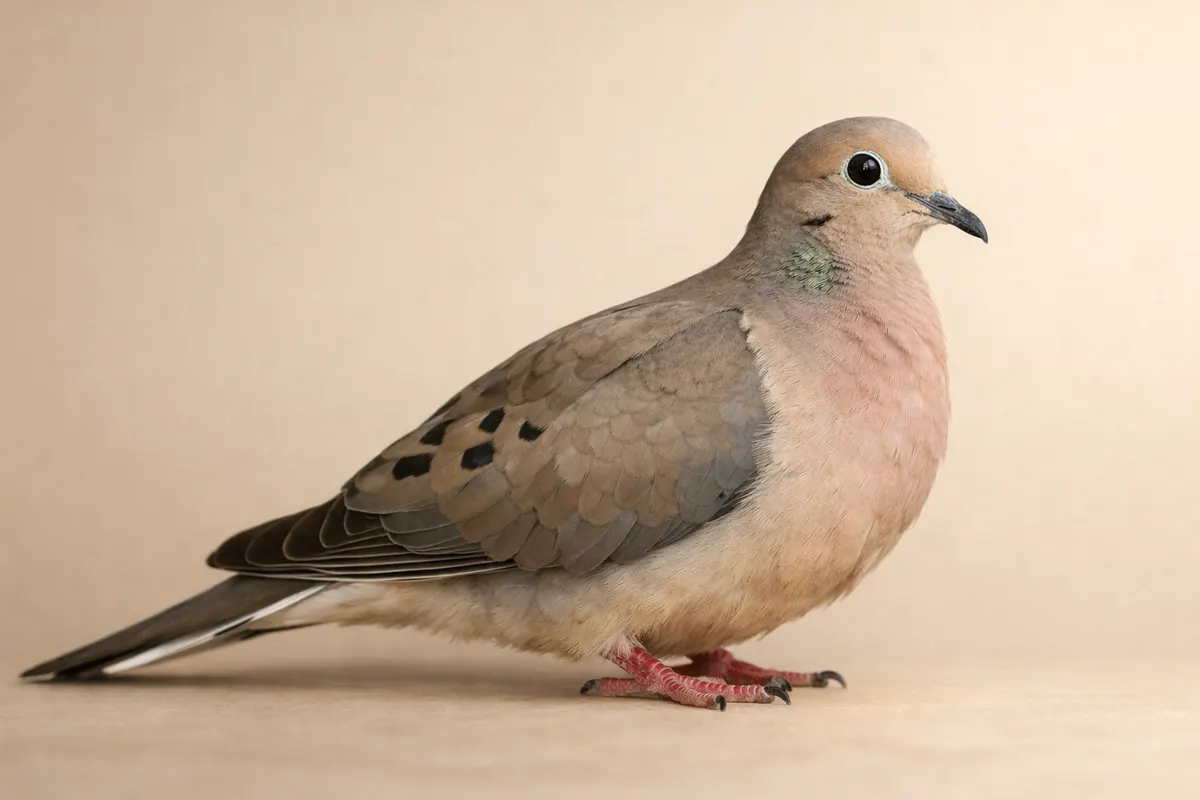
A single photo won’t prove a sound, but it can raise or lower confidence in a mourning dove call. Mourning dove call is a soft, low coo repeated in a steady rhythm; when a photo shows the species’ characteristic body shape, posture, and habitat, those visual clues make the recorded cooing a more likely match. Think of the photo as context: it either fits the sound’s expectation or it suggests you should look for alternatives.
Key photo-supported clues include a slim, long-tailed dove profile, buff-brown plumage with faint wing spots, and an open-yard or edge-of-fields habitat where mourning doves are common. If those elements line up with a short phone recording of slow, mournful coos, your confidence in labeling the sound as a mourning dove call rises—without reaching certainty.
If the picture shows a chunky pigeon, a distinct collar on the neck, a strongly white-winged dove, or a very small ground-dove profile, the same recording might better match a different species. Use the photo and recording together: visuals narrow possibilities; the audio supplies rhythm and pitch clues. Combine them, then judge how much uncertainty you still have.
- A photo can support a mourning dove call by confirming likely species in the scene, not by proving the sound alone.
- Look for slim body, long pointed tail, soft buff-gray color, and wing spots—these visual traits increase confidence.
- Habitat and behavior in the image (open lawns, fence perches, ground-feeding) are useful context for the call.
- If visual clues contradict the mourning dove profile, re-evaluate the audio against likely alternatives.
Strongest visible clues that match a mourning dove call
Start with shape and posture: mourning doves are slender birds with small heads and noticeably long, tapered tails that end in a pointed shape. In photos, the body looks elongated compared with a pigeon’s rounder silhouette. When you see that long tail and narrow head alongside a soft recorded cooing rhythm, the sight and sound form a consistent pair.
Plumage details that survive ordinary phone photos are especially valuable. Mourning doves show warm buffy-brown upperparts, a slightly pinkish wash on the breast in many birds, and small dark spots on the wings. These wing spots can be visible even in imperfect lighting; they’re more reliable than subtle shade differences. Also look for a relatively plain face and lack of a strong collar—these contrast with collared doves or ringed pigeons.
Flight and tail pattern in a sequence of photos or a short video provide strong evidence. Mourning doves show long, pointed tails with narrow white outer tail feathers that flash in flight; wingbeats are steady and somewhat fast for their size. If your photo set includes a mid-flight frame that captures these tail feathers or a characteristic silhouette, that strengthens the link to the mourning dove call.
Behavioral and contextual clues are robust when combined with the visuals. Mourning doves often perch conspicuously on wires, fence posts, or low tree branches and feed on exposed ground in open yards and agricultural edges. A visible seed-eating posture—head angled down, foraging stance on ground—supports the idea that a mournful coo recorded nearby came from a dove-shaped bird.
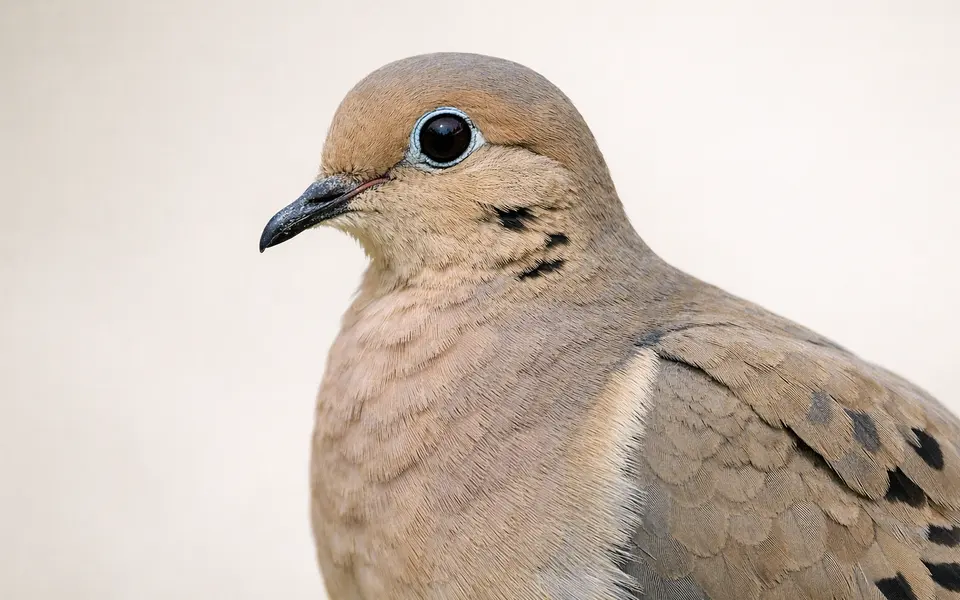
- Silhouette and tail: long, tapered tail and narrow head increase matching confidence.
- Durable plumage markers: buff-brown tones and dark wing spots that show in phone photos.
- Flight flash: white outer tail feathers visible in flight are a strong visual cue.
- Perch and feeding context: wires, fences, lawns, and ground-feeding behavior fit mourning dove patterns.
Weak signals
Color alone is a risky anchor. Lighting, camera auto-white balance, and compression can shift browns toward gray or pink; two different doves photographed at different times of day can look unlike siblings. Don’t rely on a single shade in a phone photo to identify a mourning dove call. Instead, weigh color with shape, tail length, and clear field marks.
A single blurry frame or one extreme angle is another weak signal. Tail length and wing spots are most useful when the bird’s posture is natural—side-on or slightly angled. Overhead, back-lit, or heavily cropped shots can hide the long tail and flatten the silhouette, creating false matches with pigeons or small doves.
Don’t infer species from habitat alone. While mourning doves favor open yards and fields, many other species use the same spaces. A suburban yard photo with a bird on a feeder could show a mourning dove, a pigeon, or a collared dove. Habitat should raise or lower prior probability, not replace visual confirmation.
One photo cannot prove that the visible bird made the recorded coo. If your image shows multiple birds, or if the recording was made before the photo, treat the match as provisional. Use sequence photos, timestamps, or video to link audio and visual events; otherwise label the observation as probable rather than definitive.
- Avoid relying solely on color from a single phone photo—lighting and processing change appearance.
- Don’t trust heavily cropped or blurred frames to show tail length or wing spots reliably.
- Habitat context helps but is insufficient by itself to confirm a mourning dove call.
- One photo rarely ties the sound to a specific individual; seek time-linked photos or video.
Step-by-step comparison workflow for a mourning dove call
Step 1 — Start with the audio: note rhythm and repetition. Even before inspecting the photo, listen to how many coos are grouped, the tempo (slow or fast), and whether notes rise or fall. Mourning dove call examples tend to be slow, soft coos repeated at a relaxed pace. Jot a short description: “slow triple coo, evenly spaced” or “single low coo repeated.” This audio note becomes your anchor when you study the visual evidence.
Step 2 — Evaluate clear shape and tail features in the photo. Side-on images showing a long tail and slim body are the most diagnostic. If those are present, mark the visual score as high. If the bird looks chunky or shows a broad head, lower the visual score and look at alternative species. Always cross-check wing spots and any visible white on outer tail feathers.
Step 3 — Cross-check behavioral context and season. Mourning doves are present year-round in much of their range but show distinct behaviors in breeding season (more territorial cooing, courtship flights) and winter (flocking and ground feeding). If the recording includes a territorial-sounding set of coos during spring and the photo shows a perched dove on a conspicuous perch, that combination increases likelihood of a mourning dove call.
Step 4 — Compare against common lookalikes using a short mental checklist. For each plausible alternative (rock pigeon, Eurasian collared dove, white-winged dove, common ground-dove), compare four points: size silhouette, tail shape, wing pattern, and visible head/collar. If two or more diagnostics favor mourning dove while audio matches the expected rhythm, you can label the observation as “likely mourning dove call.” If diagnostics disagree, keep the ID as tentative and record what evidence is missing.
- Anchor on audio description first, then score photos for shape, tail, and wing marks.
- Use a simple scoring rule: 3+ matching visual cues + audio fit = likely; 1–2 cues = possible; 0 cues = unlikely.
- Look for seasonal and behavioral matches—breeding season coos vs. winter flock sounds.
- When in doubt, keep the observation as provisional and note what additional evidence would increase confidence.
How to use Bird Call Identifier - Featha after your visual checklist
After you’ve checked visible clues, use Bird Call Identifier - Featha as a structured second opinion rather than a final arbiter. First, summarize your visible evidence in a few short notes: silhouette matches, tail visible, wing spots present, habitat open lawn. Those details help you interpret the app output: if the app returns a mourning dove result that matches your notes, treat that as supporting evidence. If results differ, revisit the checklist and look for missing photos or additional audio.
Recordings made with your phone’s microphone are fine for first-pass analysis. For better results in Featha (or any identifier), capture a short recording of 10–20 seconds that includes the full coo sequence, and add a few photos showing side-on, perched, and (if possible) flight frames. Because Featha runs on iOS, use the device’s voice memos or the app’s built-in recorder to keep timestamps consistent with your photos—timestamps make it much easier to link sound to specific images.
Treat uncertain matches as research notes. If Featha suggests mourning dove with moderate confidence but your photos lack the key tail or wing features, log the result as ‘probable’ and add what would help: a clear side-on shot or a flight frame. If Featha suggests a different species, use the app’s alternative suggestions to inspect which visual cues conflict (for example, a visible collar that points to Eurasian collared dove). The app is most effective when used alongside the checklist, not as a substitute for it.
Finally, use one relevant resource for timing context when needed. If you want to understand whether a coo pattern fits morning territorial behavior or evening contact calls, consult the short field primer Why Birds Sing at Dawn: Timing, Territory, and Morning Sound Clues for background on daily vocal patterns and context. That article can help you interpret whether a set of coos is likely tied to breeding territory, dawn chorus overlap, or casual contact calling.
- Summarize your visible clues before opening the app—it clarifies how you’ll interpret results.
- Record 10–20 second clips and take side-on plus flight photos to improve match reliability.
- Use Featha results as supporting evidence; mark uncertain IDs as provisional and collect more data.
- If app suggestions differ from your read, compare specific visual features that point to the alternative species.
Related guides
Check your visual clues, then try Bird Call Identifier - Featha
Use Bird Call Identifier - Featha on iOS as a practical next step after you’ve checked silhouette, tail, wing marks, and habitat in your photos. Record a 10–20 second clip that includes the coo sequence, add a side-on and, if possible, a flight photo, then run the recording in Featha to get candidate matches. Treat results as supporting evidence—not proof—and mark unclear matches as provisional research notes you can revisit with better photos or additional recordings.

Frequently asked questions
What does a mourning dove call sound like and how does that link to photos?
A mourning dove call is generally described as a soft, mournful series of coos with a slow, steady rhythm. Photos help by confirming whether a dove-shaped bird was present and visible at the time of the recording—especially if the image shows the long tapered tail, buff-brown tones, and wing spots typical of mourning doves. When sound and photo cues align, your identification grows more likely; when they conflict, treat the ID as tentative.
Can I identify a mourning dove call from a single photo?
No. A single photo alone cannot prove which bird produced a sound. It can, however, raise or lower your confidence in a mourning dove call by showing features that fit or contradict a mourning dove profile. Use multiple photos (side-on and flight if possible), a time-stamped recording, and habitat notes to move from guesswork to a more evidence-based assessment.
Which species most commonly get confused with mourning dove calls in photos?
Common lookalikes include rock pigeons (chunkier shape and different head proportions), Eurasian collared doves (paler with a dark partial collar), white-winged doves (noticeable white wing edge), and smaller ground-doves (far smaller, rounder bodies). For sound, collared doves and white-winged doves have different rhythms or tonal qualities; pairing photos with clear audio helps rule these alternatives in or out.
What should I do if the app suggests mourning dove but my photo is ambiguous?
Treat the app’s suggestion as a helpful hint rather than a conclusion. Note which visual clues are missing—tail length, wing spots, or clear flight flash—and try to capture additional images or a short video next time. If you cannot get more photos, record the observation as probable and include a brief note about what evidence would make the ID stronger. This keeps your data useful for later review without overstating certainty.