
American Robin
By Luca Navarro
Learn bird song mnemonics with an American Robin photo example, clear limits on photo evidence, and practical steps for comparing a separate audio recording.
Identification summary
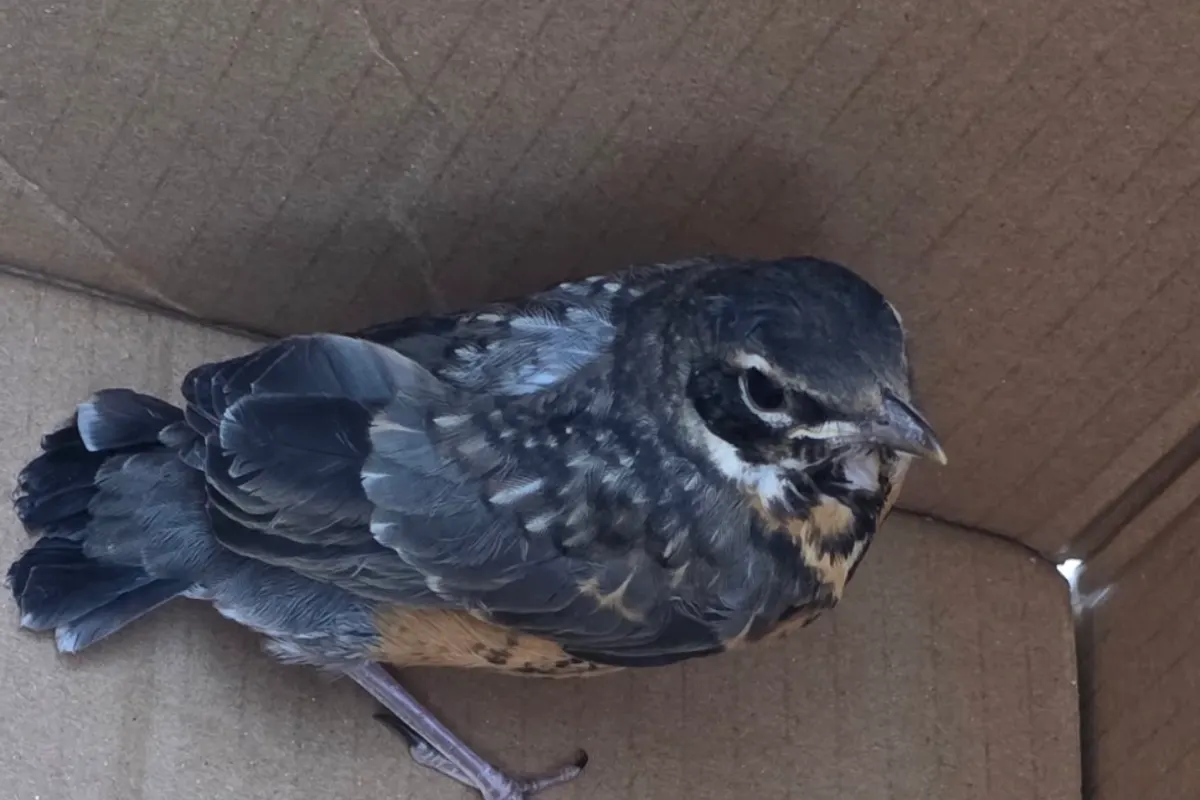
The selected photo scan returned American Robin on June 4, 2026. The photograph shows a young-looking bird with a spotted breast and pale feather edges, consistent with the juvenile appearance illustrated in Cornell’s identification reference.
This is a photo-context example for bird song mnemonics. No recording, written sound description, or confidence score was supplied with the scan, so the listening guidance is general species reference rather than a claim about this particular bird.
Scan result
| App identification | American Robin |
|---|---|
| Scan record date | June 4, 2026 |
Visible photo clues
| Appearance | Spotted breast, pale-edged gray wing feathers, and a pale eye-ring |
|---|
Evidence
| Audio recording | Not supplied with this photo scan |
|---|---|
| Confidence score | Not reported by the selected scan |
Start with the bird in the photograph
This example uses a real photo scan dated June 4, 2026, for which the app returned American Robin. The bird is photographed in a cardboard box. Its spotted breast, pale-edged gray wing feathers, and pale eye-ring provide useful visible context for comparing the app result with a trusted reference.
Cornell’s American Robin identification guide (https://www.allaboutbirds.org/guide/American_Robin/id) illustrates spotting on the back and chest of juveniles. The selected bird’s appearance is consistent with that reference. The photo does not establish its exact age, sex, health, or why it is in a box; none of those details should be inferred from the scan.
A photograph and a song recording answer different questions. This case contains no audio or observation linking the pictured bird to a particular sound. Use it to connect a visual identification example with a listening lesson, while keeping the two kinds of evidence separate.
Learn the Robin mnemonic as a listening reference
Bird song mnemonics turn a remembered pattern into words or syllables that are easier to recall. For the adult American Robin’s familiar song, a common cue is “cheerily, cheer up.” The words are a human memory aid, not literal speech or an exact transcription.
Cornell’s American Robin sound reference (https://www.allaboutbirds.org/guide/American_Robin/sounds) describes clear whistles arranged into recurring phrases, with rising and falling pitch and pauses between sequences. Compare those features with the reference recordings instead of relying only on how well a phrase resembles English words.
That adult-song reference does not demonstrate that the young-looking bird in this photo produced the same sound. No song, call, or mnemonic was recorded with this scan. Keep a reference description separate from something you actually heard, especially when a bird is hidden or several birds are vocalizing.
- Listen for the grouping and spacing of notes before choosing words.
- Check pitch movement and pauses across several complete phrases.
- Keep songs separate from short calls; one species can produce different kinds of sounds.
Make your own mnemonic example checkable
For a new observation, record from a normal, unobtrusive distance and watch the singer when possible. Do not approach a bird, handle it, or use playback just to obtain a better sample. Save several uninterrupted phrases so you can compare the full pattern rather than one isolated sound.
Write your mnemonic soon after listening, then replay the same passage. If the words hide a pause or add an extra note, change the memory cue. Keep your own observation time and location with the recording; those details are not available for the photographed case presented here.
For the broader comparison method, see Bird Song Identification (https://birdcallidentifier.app/blog/bird-song-identification). If a recording contains several types of vocalization, Bird Alarm Calls vs Contact Calls (https://birdcallidentifier.app/blog/bird-alarm-calls-vs-contact-calls) offers related context. These guides and Cornell’s recordings are learning references, not audio attached to this scan.
Related guides
Compare your own recording with the bird sound identifier
If you have a clear recording, try the bird sound identifier at https://birdcallidentifier.app/tools/bird-sound-identifier for a first-pass suggestion. Compare the result with your audio and trusted references. The tool cannot supply missing audio for this photo example.
Take the next step →Frequently asked questions
Does this example include a recording of the photographed Robin?
No. The selected scan supplies a photograph and an app identification. Its song discussion uses general American Robin references. It does not claim that the pictured bird sang, or that any sound was recorded with this photo.
What does the familiar Robin mnemonic describe?
It is a memory cue for the adult species’ rolling, whistled song phrases. Listen to a trusted recording and compare rhythm, pitch movement, and pauses. A remembered phrase alone cannot establish which bird produced a sound.
Why does this bird look different from a typical adult Robin?
Its spotted appearance is consistent with juvenile Robin reference images. The scan does not provide an exact age or a developmental assessment, so this page limits that comparison to visible plumage rather than making claims about age or health.
Can a photo identification tell me which bird sang nearby?
Only an observation or recording that connects the sound with its singer can support that link. A bird photographed nearby might not be the one you heard. Keep your visual and audio evidence separate until you can check the connection.