Common Bird Sounds
Common Bird Sounds: Compare Calls and BirdNET Matches
Identify common bird sounds from short recordings. Compare BirdNET suggestions, model scores and time ranges, then listen alongside trusted reference audio.
Choose an existing 3–30 second audio file, up to 10 MB. Preview the recording locally, then press Analyze to send it for identification. The results show BirdNET species suggestions, model scores, and start/end times. Use replay to listen again from a suggested start time.
A clear clip gives you a starting point for comparing likely callers. Listen for the pace, repeated phrases, pitch and pauses, then compare those details with a trusted reference recording. Model suggestions are hypotheses to check; a high score alone does not establish the species.
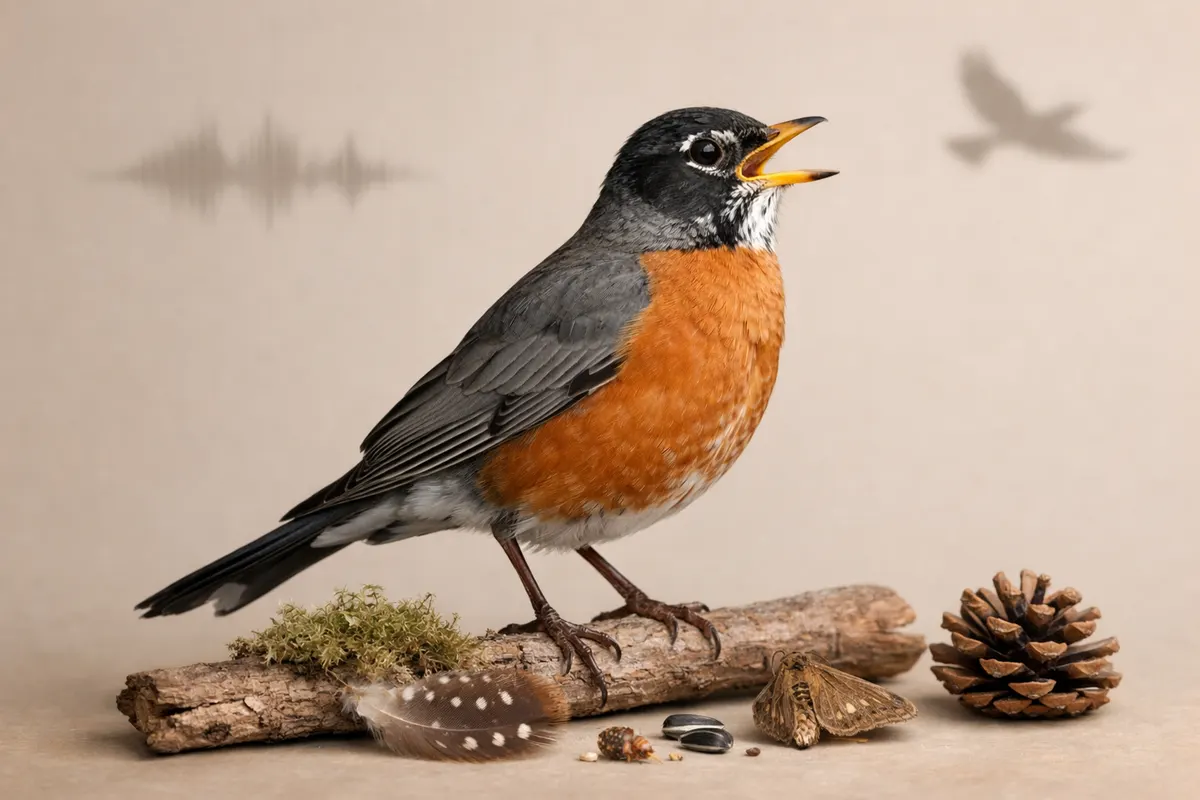
If you also saw or photographed a bird, treat that as a separate observation. A visible bird may differ from the one calling. Check whether the sighting, recording, location and time are consistent before associating a photo with an audio suggestion.

How identification works
Step 1
Snap a photo
Take a clear, well-lit photo of your item in the Bird Call Identifier: Featha app.
Step 2
Get an instant identification
The app reads the visible clues and returns the closest matches in seconds.
Step 3
Review the details
Compare the result with your photo, review any uncertainty, and check the suggested next steps.
Listening clues to compare before accepting a match
Start with the recording: is the sound a repeated phrase, a low hoot, a soft coo, a harsh note or a rapid trill? Repetition pattern and tempo are useful listening clues you can compare by ear. Background noise and overlapping callers can make a short sample harder to interpret.
Use your own notes about region, season, time and habitat when reviewing candidates. These are checks you make alongside the results. If you have a separate sighting, compare size and markings only after considering whether the same bird could have produced the recorded sound.
- Rhythm: compare the order, spacing and repetition of notes.
- Pitch and tone: listen for low or high notes and clear, buzzy or rough qualities.
- Context: check your location, season and time of day against a trusted species guide.
- Optional visual cross-checks: note sparrow-sized versus hawk-sized proportions, bill shape and distinctive markings without assuming a photographed bird was the caller.
What the Bird Sound Identifier results show
After you upload the clip and press Analyze, the result screen lists BirdNET candidate species and their model scores. A score describes the model match; it is not a calibrated probability or a confirmed identification. Review alternative suggestions as well as the highest-scoring one.
Each candidate includes start and end times for the suggested detection. Replay begins at the indicated start time in your original clip. Use the player controls and the displayed end time to review the relevant sound, then compare it with a reference recording.
The tool can return an empty candidate list. That does not establish that no bird was recorded: distance, noise, overlapping calls and model coverage may affect the result. Try a clearer recording or leave the identification unresolved. Use your own location and habitat notes when comparing possible matches.
- Candidate species returned by BirdNET.
- Model scores to help compare suggestions.
- Start and end times for the suggested detections.
- Replay from a suggested start time in the original recording.
Compare similar calls and separate visual observations
Similar-sounding birds can appear in the same candidate list. Compare the full phrase, spacing and tone with reference audio instead of relying on one familiar note. The examples below concern North American species; use a guide for your region when reviewing a recording.
For an owl suggestion, compare the Great Horned Owl and Barred Owl species pages for appearance and habitat: https://birdcallidentifier.app/wiki/great-horned-owl and https://birdcallidentifier.app/wiki/barred-owl. A separate sighting can support a possible identification, but it does not by itself identify the bird heard in the recording.
- Great horned owl sounds include low hoots with a stuttering pattern; compare the phrase with the more conversational cadence of a barred owl call.
- A mourning dove sound may be mistaken for an owl. Compare the cooing phrase with reference audio before choosing a species.
- An eastern screech owl call can include a trill or descending whinny. Compare the sound pattern rather than judging from pitch alone.
Frequently asked questions
How can I tell if my 10-second clip captured a mourning dove sound?
Listen for a soft introductory coo followed by two or three stronger coos. A similar tone on its own is not enough for identification. Upload the clip, compare the candidate names and timestamps, and listen alongside Cornell Lab reference audio: https://www.allaboutbirds.org/guide/Mourning_Dove/sounds. A separate sighting may support a tentative match, but another nearby bird could have made the call.
What should I expect when I upload great horned owl sounds recorded at night?
Great horned owl sounds often include deep hoots with a stuttering pattern. Upload a 3–30 second clip up to 10 MB and review the model suggestions, scores and detection times. Replay from the suggested start and compare the phrase with Cornell Lab recordings: https://www.allaboutbirds.org/guide/Great_Horned_Owl/sounds. A high-scoring candidate still needs checking against the sound and your location.
How can I check a barred owl call when owls sound similar?
The familiar barred owl call is often described with the phrase “Who cooks for you? Who cooks for you-all?” Compare the complete cadence with Cornell Lab reference recordings: https://www.allaboutbirds.org/guide/Barred_Owl/sounds. In your results, use timestamps to find the relevant sound and replay from its start. Consider other candidates and your region before settling on a possible match.
Can a backyard recording suggest an eastern screech owl call?
An eastern screech owl call may sound like an even trill or a descending whinny. Compare your recording with Cornell Lab examples: https://www.allaboutbirds.org/guide/Eastern_Screech-Owl/sounds. Upload a clear 3–30 second file and use model suggestions and replay as aids. Noise, other callers and regional differences can leave the identification uncertain; a separate photo does not automatically identify the recorded caller.
Related guides
Compare your recording with the Bird Sound Identifier
Have a recording of common bird sounds? Upload a 3–30 second audio file up to 10 MB, preview it locally, then press Analyze. Review BirdNET species suggestions, model scores and detection times, and use replay to compare the sound. Open the Bird Sound Identifier: https://birdcallidentifier.app/tools/bird-sound-identifier